


Breadcrumbs
These links will help you get back to where you want to go faster.
How to Fix a Hole in Your Roof
Living in Arizona means embracing the beauty and challenges of the desert climate. From morning jogs at the Riparian Preserve to enjoying iced coffee in the Downtown Heritage District, residents know the rhythm of their environment — especially the swift arrival of the North American Monsoon season around mid-June. While this season brings dramatic lightning displays, it simultaneously tests the resilience of your home, particularly your roof, which acts as a vital barrier against extreme weather forces.
A hole in your roof—whether caused by fallen debris, structural failure, or intense winds—can quickly escalate into a severe problem. Ignoring even minor damage invites water intrusion, structural decay, costly repairs, and potential health hazards like mold growth. This article provides a clear, climate-specific approach to repairing roof holes in Arizona, ensuring your home withstands desert extremes with lasting protection.
Looking for a roofing contractor near you for a shingle roof, flat roof, foam roof, tile refelt, or tile roof installation? We are roof insurance claim specialists that are licensed, bonded, and insured. Our roofing company offers both residential and commercial roofing services. We serve Gilbert Arizona, Phoenix Metro and Rio Rico, Arizona. Call 602-350-4052 or 520-264-8776 or schedule an appointment online for a free roof inspection.
What you will learn in this article:
– Living in Arizona involves dealing with extreme desert climate challenges, especially the North American Monsoon season that tests roof durability.
– Roof holes from debris, structural issues, or wind can cause serious problems like water intrusion, decay, costly repairs, and mold.
– Roof hole repair steps for small, medium, and large holes, plus emergency tarping.
– Essential desert roofing products include heavy-duty tarps, UV-stabilized roofing cement, polyester mesh reinforcement, reflective elastomeric coatings such as APOC® 248 Arizona White, and plywood or 2×4 lumber for structural repairs.
– Professional repairs are critical due to: Compliance with strict Arizona building codes and HOA regulations. Safety concerns on slippery, steep roofs. Insurance requirements favoring professionally documented repairs for claims.
– Standing water from monsoon rains adds heavy structural load which can lead to roof collapse if the roof lacks proper drainage and integrity.
The Science Behind Roof Damage in the Desert
Understanding the unique environmental stressors on your roof is crucial before attempting any repair. Arizona’s desert climate subjects roofing materials to intense thermal and mechanical pressures that accelerate wear and tear, often turning small vulnerabilities into major failures.
Extreme Thermal Loading
Summer temperatures frequently climb above 110°F, with roof surfaces reaching blistering levels of 160°F or more. At this intensity, asphalt shingles lose their essential oils, making them brittle and less effective. Plumbing vents, waterproof layers, and coatings deteriorate faster under such heat, compromising your roof’s integrity.
Thermal Expansion and Contraction (“Roof Breathing”)
The desert’s rapid temperature changes cause roofing materials to repeatedly expand and contract. When a storm cools hot shingles abruptly, this cycle generates physical stress. Inexpensive or aging materials crack under pressure, creating gaps where water and wind can infiltrate.
Wind Uplift from Monsoon Microbursts
Arizona experiences monsoon winds that can reach 60 to 80 mph or higher during microbursts. These winds exert powerful negative pressure on roofs, similar to an airplane wing’s lift. Even a small hole or weak spot can be exploited by these gusts, causing shingles and tiles to peel away and expose the deck to further damage.
Step-by-Step Roof Hole Repair Guide
Step 1: Emergency Tarping—Protect Your Home Immediately
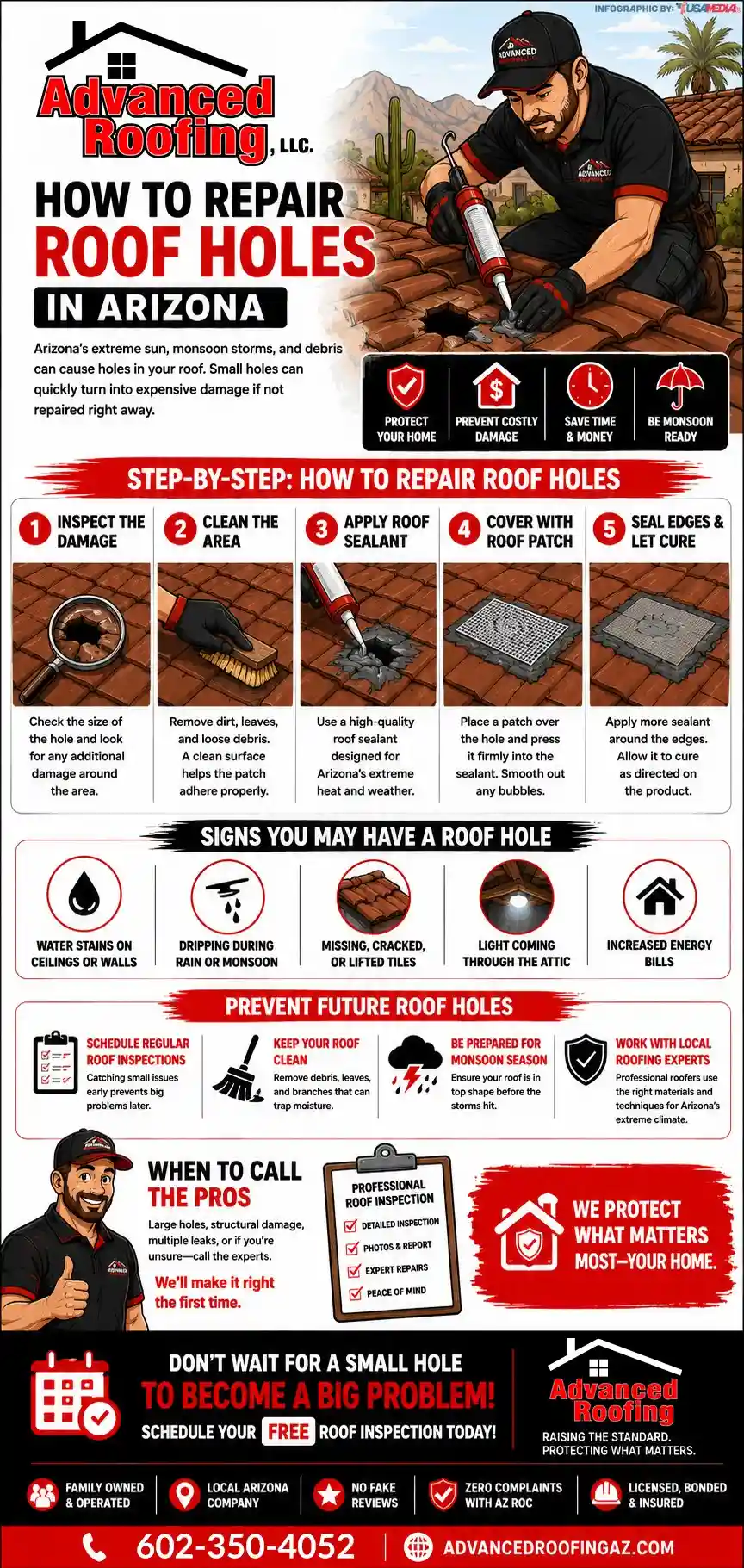
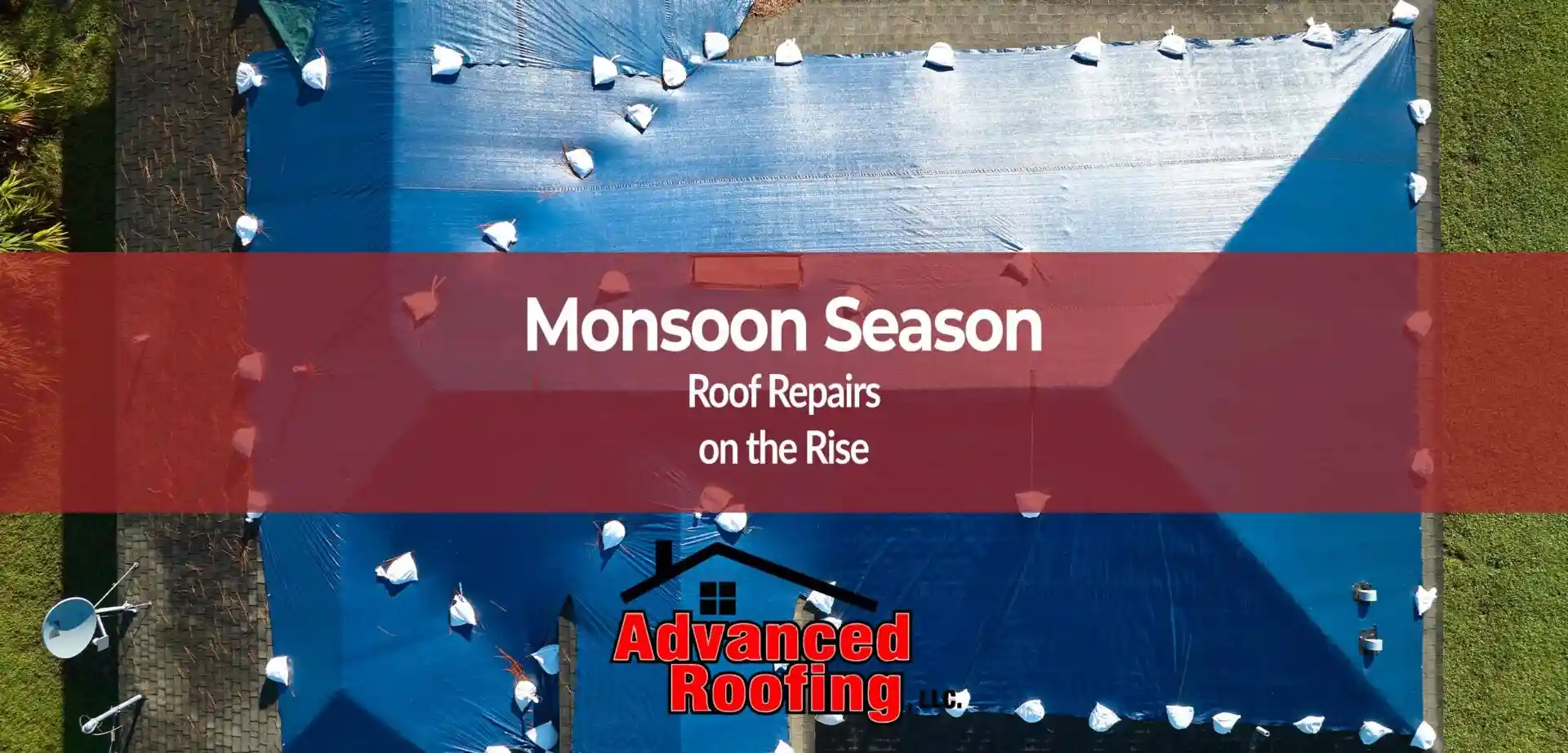
If your roof sustains a large breach from a falling tree limb or storm debris, acting promptly to block water entry is critical. Use a heavy-duty waterproof tarp designed to withstand intense desert winds and rain.
- Measure Properly: Unroll the tarp fully on the ground to ensure it is large enough to cover the hole with an additional four feet of overlap around all sides. This margin ensures complete coverage and easier anchoring.
- Anchor Securely: Do not settle for makeshift fixes like loose bricks or a few scattered screws. Use wooden batten boards or sandbags (ideal for flat foam roofs) to clamp the tarp firmly in place so it can resist monsoon winds’ uplift forces.
- Limit Duration: Tarps are a temporary fix only. Leaving one on for too long traps moisture underneath, accelerating wood rot, decking deterioration, and fungal growth that can extend into your home.
Step 2: Repairing Small Punctures and Surface Breaches
Minor penetrations under one inch—caused by hail, debris, or nail back-out—can often be patched successfully if addressed early. However, the key lies in choosing the right materials and preparation.
- Avoid Generic Sealants: Common caulks or wet patch products are ill-equipped to withstand high UV exposure and extreme heat. They crack and peel within months, rendering the patch useless.
- Use UV-Stabilized, High-Performance Products: Opt for specialty silicones or roofing cements engineered for desert conditions. On flat or low-slope roofs common in Southwestern architecture, premium elastomeric reflective coatings—such as APOC® 248 Energy-Armor® Arizona White—not only seal but also reflect heat, reducing roof surface temperatures.
- Apply the Three-Layer Reinforcement Method: After cleaning the area thoroughly, fill the hole with high-heat elastomeric sealant. Then embed a durable polyester fabric mesh, like Tie-Tex, into the wet layer, and finish with a seamless topcoat. This creates a flexible, watertight shield resistant to thermal stress and mechanical wear.
Step 3: Repairing Medium to Large Holes with Structural Replacement
When damage infiltrates beyond shingles and underlayment into your roof’s wooden decking, a comprehensive mechanical repair is essential. Temporary patches won’t restore the roof’s load-bearing capacity or ensure long-term stability.
- Expose the Area: Using proper safety gear and a pry bar, carefully remove shingles or tiles around the hole. Clean away all damaged underlayment or tar paper.
- Cut a Precise Rectangle: Mark a clean square or rectangular area around the damaged decking, aligning edges with the centers of the nearest rafters. Use a circular saw at decking depth to remove the compromised section cleanly.
- Install Support Bracing: Cut 2×4 lumber braces that span under the existing decking edges. Anchor these braces securely into the roof rafters to create a firm foundation.
- Fit the New Decking: Cut new plywood or OSB sheathing matching the original board thickness and secure it to the braces. Apply a quality, water-resistant underlayment before weaving new shingles or tiles, ensuring proper overlap for effective water shedding.
Request a Free Roof Inspection
Get a no-hassle no-obligation estimate by on of our emergency storm damage specialists on the cost to repair or place your roof.
Looking for a roofing contractor near you for a shingle roof, flat roof, foam roof, tile refelt, or tile roof installation? We are roof insurance claim specialists that are licensed, bonded, and insured. Our roofing company offers both residential and commercial roofing services. We serve Gilbert Arizona, Phoenix Metro and Rio Rico, Arizona. Call 602-350-4052 or 520-264-8776 or schedule an appointment online for a free roof inspection.
Essential Roofing Products for Desert Conditions in Arizona
| Product / Material | Purpose | Why It Matters in Arizona |
|---|---|---|
| Heavy-Duty Waterproof Tarp | Emergency water barrier | Prevents immediate water damage during monsoon storms |
| UV-Stabilized Roofing Cement | Sealant for minor holes and flashing | Engineered to resist cracking and melting at temperatures up to 160°F |
| Tie-Tex Polyester Fabric Mesh | Reinforcement for flat or foam roof patches | Increases tensile strength and durability against expansion and contraction |
| APOC® 248 Arizona White Coating | Reflective elastomeric top coat | Reflects solar radiation, reduces roof heat gain, and prolongs roof life |
| Plywood/OSB & 2×4 Lumber | Structural deck repair | Restores load-bearing integrity and provides foundation for roofing layers |
Why Professional Roof Repairs Matter in Arizona
Although DIY fixes might appear budget-friendly initially, the risks and potential costs of improper repair far outweigh the savings. Professional intervention ensures compliance with local building codes and HOA regulations, critical for East Valley homeowners.
Structural and Legal Compliance
Arizona enforces strict building codes that govern roofing materials and repair techniques. Additionally, many neighborhoods operate under HOAs with detailed guidelines on shingle color, tile style, and visible repairs. An unapproved or amateur fix can cause costly code violations and HOA fines.


Safety Considerations
Working on roofs in Arizona’s extreme heat and on steep, slippery surfaces carries significant hazards. Loose shingles resemble ball bearings, while tile roofs have steep pitches that reduce traction. Heat exhaustion and falls are serious risks for untrained individuals attempting repairs.
Insurance and Claims
Insurance companies prefer professionally documented repairs when evaluating damage claims due to wind, hail, or storm events. DIY repairs risk obscuring critical evidence of storm damage, potentially leading to claim denials or reduced payouts that could have covered a full replacement.
Understanding the Stakes: The Hidden Danger of Standing Water
Even moderate monsoon rainfall—around 1.5 inches—can create significant structural load due to standing water on your roof. This static weight may exceed 7,800 pounds over a standard residential roof deck, stressing components beyond typical engineering assumptions. Without proper drainage and structural integrity, a weak patch can lead to catastrophic collapse.
Protect Your Home with Expert Roof Repair in Arizona
Your roof is the frontline defense against the harsh desert climate and unpredictable monsoon storms. Small punctures can quickly escalate into severe interior damage or structural failure, but timely, expert repairs can safeguard your home’s value, comfort, and safety.

Don’t risk hazardous DIY attempts or temporary fixes that leave your property vulnerable. Trust the specialists at Advanced Roofing, LLC who understand Arizona’s unique climate demands and local regulations. They offer thorough inspections, durable repairs, and peace of mind before the monsoon season arrives.
Looking for a roofing contractor near you for a shingle roof, flat roof, foam roof, tile refelt, or tile roof installation? We are roof insurance claim specialists that are licensed, bonded, and insured. Our roofing company offers both residential and commercial roofing services. We serve Gilbert Arizona, Phoenix Metro and Rio Rico, Arizona. Call 602-350-4052 or 520-264-8776 or schedule an appointment online for a free roof inspection.
FAQs Frequently Asked Questions
What are the main causes of holes in a roof in Arizona?
Why is it important to repair even small roof holes promptly?
How does Arizona’s desert climate affect roof materials?
What steps should be taken for emergency tarping after a large roof hole occurs?
What materials are recommended for repairing small punctures in desert roofs?
How should medium to large roof holes involving decking damage be repaired?
Why are professional roof repairs especially important in Arizona?
What dangers does standing water from monsoon rains pose to roofs?
Can temporary tarps be left on a roof long-term after a hole is found?
What benefits do reflective elastomeric coatings provide for roofs in Arizona?
Not what you are looking for?
Design your roof using our Owens Corning Pick Your Shingles software or learn more about roofing using our Roofing Glossary or Roofing FAQs pages.
Get an Advanced New Roof Installation
Advanced Roofing, LLC. ensures that the roofing contractors hold necessary certifications and licenses required by Arizona Law & Registrar of Contractors ROC# 311509. Our Owens Corning certification is from the manufacturer – this indicates our expertise and commitment to quality, professionalism and that we hold ourselves to a high standard. Craftsmanship over salesmanship as we like to say.
We have the necessary insurance coverage, including liability and workers’ compensation. This protects both the contractor and the building owner from potential liabilities in case of accidents or property damage during the project. If you want more information, just call us and talk with the owner Mark Muzio: 602-350-4052.
Limited & lifetime warranties are provided by the contractor for both materials and workmanship. Additionally, ask us about commercial roofing maintenance services to ensure the long-term performance and durability of the commercial roof. In the event of a roof leak or damage, prompt action is essential to prevent further deterioration and minimize potential losses. Commercial buildings with flat roofs require specific considerations for emergency repairs and replacement.
Emergency roof repair is something we specialize in. We have seen and fixed bad work from other contractors and will tell you that it is important to make the right choice the first time. We will assess the extent of the damage and provide immediate solutions to mitigate further water infiltration. Temporary measures, such as tarping or patching, may be implemented until a permanent repair can be executed.
When replacing a roof, consider the existing roofing material, building structure, and budget. Consult with a roofing contractor to determine the most suitable replacement option, such as shingle, tile, TPO, EPDM, polyurethan foam or modified bitumen, etc. Proper installation and adherence to building codes are crucial to ensure the longevity and performance of the new roof. The selection of appropriate roofing materials, such as polyurethane foam, TPO, rubber, modified bitumen, or metal, depends on factors such as durability, energy efficiency, and budget.