


Breadcrumbs
These links will help you get back to where you want to go faster.
Preparing Your Roof for Arizona’s Monsoon Season: Expert Strategies to Prevent Damage
Understanding the Impact of Arizona’s Monsoon Season on Roofs
Every year from June through September, Arizona faces a challenging monsoon season characterized by intense storms, powerful winds, and heavy rainfall that place roofs under tremendous stress. While these storms offer relief from the region’s extreme heat, they bring destructive elements such as winds often exceeding 60 mph, torrential downpours, and airborne debris that jeopardize the integrity of residential and commercial roofing systems. Industry experts at Advanced Roofing, LLC., a leading Arizona roofing contractor, stress the importance of understanding these risks and adopting proactive maintenance and repair practices to protect your property.
Looking for a roofing contractor near you for a shingle roof, flat roof, foam roof, tile refelt, or tile roof installation? We are roof insurance claim specialists that are licensed, bonded, and insured. Our roofing company offers both residential and commercial roofing services. We serve Gilbert Arizona, Phoenix Metro and Rio Rico, Arizona. Call 602-350-4052 or 520-264-8776 or schedule an appointment online for a free roof inspection.
What you will learn in this article:
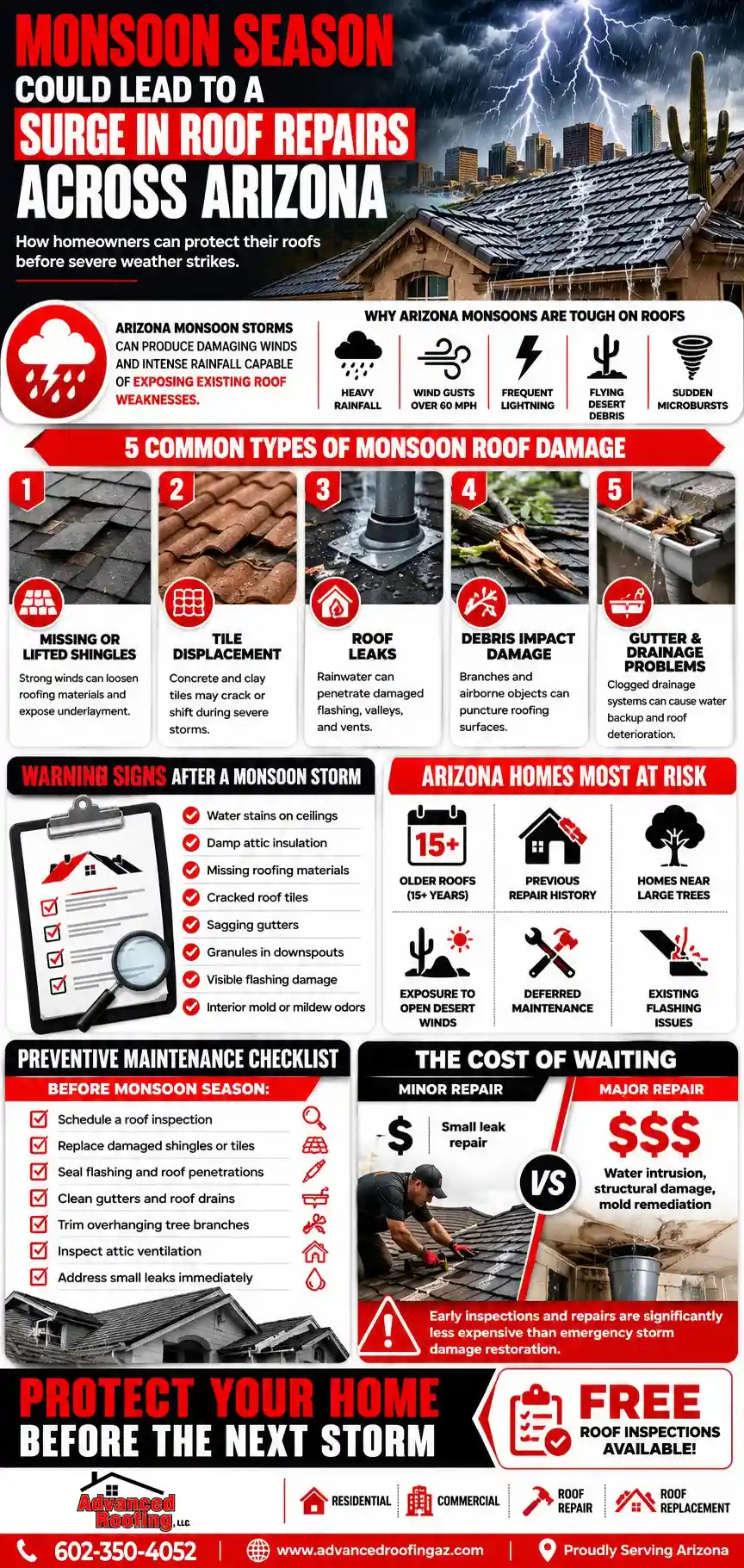
– Arizona’s monsoon season (June–September) brings intense storms, high winds, heavy rain, and debris that pose significant risks to roofs, causing damage such as punctures, cracked shingles, loosened tiles, and water intrusion.
– Monsoon winds can exceed 60 mph and create dust storms (“haboobs”) that propel debris capable of damaging roofing materials and compromising structural integrity.
– Flat and low-slope roofs are vulnerable to drainage issues from clogged gutters and drains, leading to water ponding, membrane failure, and mold growth.
– Clay and concrete tile roofs are susceptible to wind damage that can dislodge tiles, expose underlayment, and cause leaks or structural problems.
– Early roof inspections before monsoon season (May or early June) are critical to identify and repair vulnerabilities like damaged tiles, clogged drainage, and loose fasteners.

– Routine maintenance steps—including cleaning gutters, trimming branches, and documenting roof conditions—help improve storm resilience and support insurance claims.
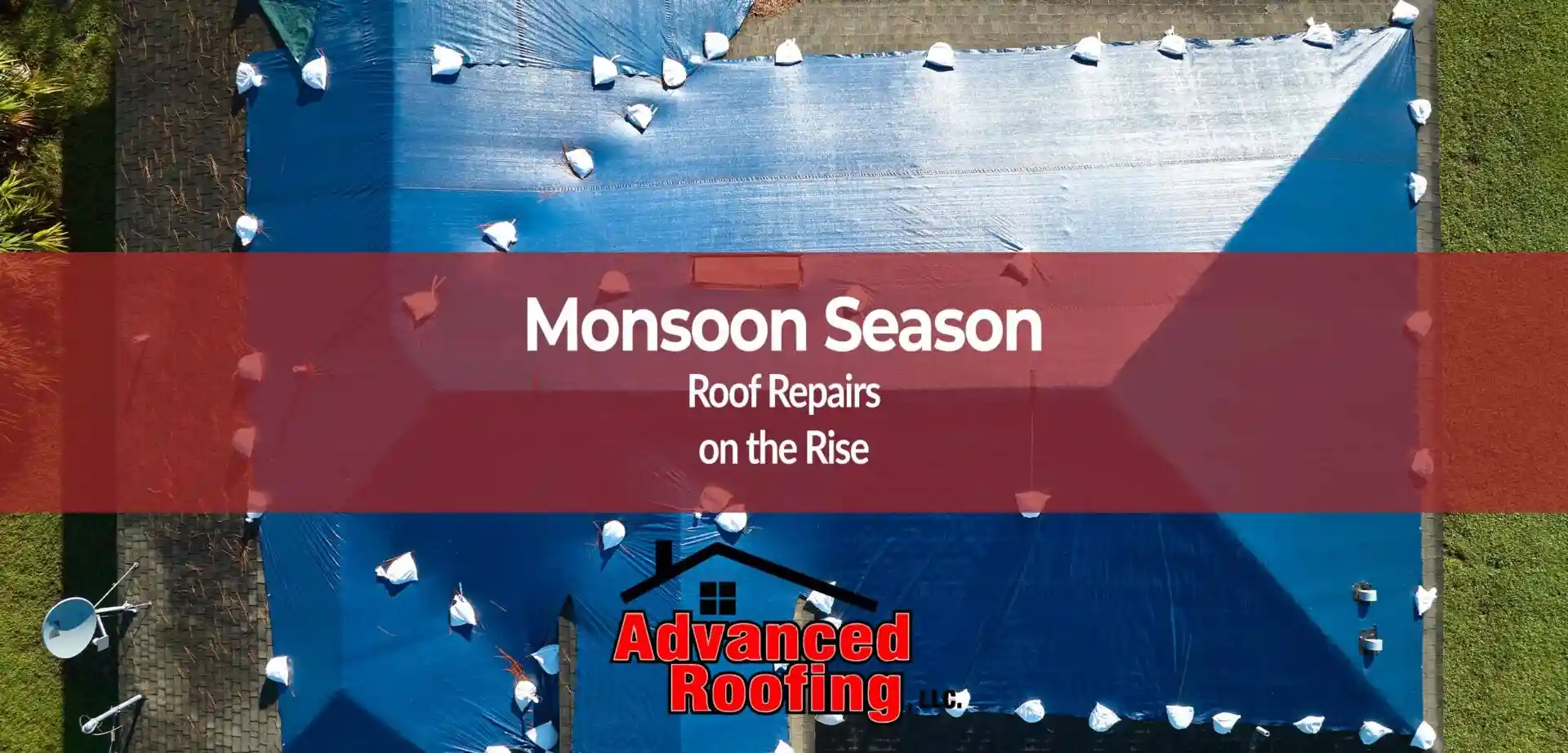
– Emergency roof tarping by a professional roofer like Advanced Roofing, LLC. provides temporary protection after storm damage, preventing further water intrusion and structural harm while repairs are arranged.
– Signs of monsoon roof damage include missing shingles or tiles, water stains inside the home, sagging or soft roofing areas, damaged flashing, and standing water on flat roofs.
The Unique Threats Posed by Monsoon Winds and Debris
Arizona’s monsoon winds not only generate sustained gusts above 60 miles per hour but also create localized microbursts and massive dust storms called “haboobs,” which propel debris at high velocities. Everyday items like branches, gravel, and yard equipment can become airborne projectiles, capable of puncturing roof membranes, cracking shingles, and loosening critical fasteners. Such damage is often more than cosmetic; even minor breaches enable water penetration that accelerates mold growth, structural deterioration, and expensive repair needs.
Wind uplift further endangers roofing systems by peeling back edges and entire sections of roofing materials. This peeling compromises the roof’s structural integrity and quickly necessitates emergency repairs to avoid severe interior water damage and long-term degradation.
Hidden Dangers: Drainage Issues on Flat and Low-Slope Roofs
Flat and low-slope roofs, which are prevalent in Arizona’s architecture, face a distinct hazard during monsoons: poor drainage caused by clogged gutters, scuppers, and drains.
Desert dust, leaves, and debris carried by storms accumulate and block these drainage systems, causing water to pool, or pond, on the roof surface. This ponding creates hydrostatic pressure that stresses roofing membranes, promotes seam failures, and facilitates mold growth. Over time, this leads to membrane deterioration and structural strain, often requiring extensive and costly repairs or roof replacement.

Addressing drainage maintenance proactively is essential to avoid these silent yet destructive failures. Routine cleaning of gutters and drains before monsoon season significantly reduces the risk of water ponding and membrane damage.
Vulnerabilities of Clay and Concrete Tile Roofs
Clay and concrete tiles, synonymous with Southwestern design, offer durability and energy efficiency but are susceptible to wind-related damage during monsoons. High-velocity winds can dislodge or loosen tiles, exposing the underlying protective layer—the underlayment. Once exposed, this barrier deteriorates rapidly under sun and water exposure, allowing rainwater to infiltrate and cause leaks, ceiling damage, and potential structural issues.
Additionally, displaced tiles pose safety hazards from falling debris, making swift emergency repairs a necessity following storms.
Request a Free Roof Inspection
Get a no-hassle no-obligation estimate by on of our emergency storm damage specialists on the cost to repair or place your roof.
Looking for a roofing contractor near you for a shingle roof, flat roof, foam roof, tile refelt, or tile roof installation? We are roof insurance claim specialists that are licensed, bonded, and insured. Our roofing company offers both residential and commercial roofing services. We serve Gilbert Arizona, Phoenix Metro and Rio Rico, Arizona. Call 602-350-4052 or 520-264-8776 or schedule an appointment online for a free roof inspection.
Prepping Your Roof for Monsoon Season: Essential Prevention Practices
The Power of Early Roof Inspections
Scheduling comprehensive roof inspections well before the monsoon season—ideally in May or early June—is one of the most effective strategies to safeguard your property. Advanced Roofing recommends early inspections to detect damaged tiles, weak seals, clogged drainage, loose fasteners, and other vulnerabilities that monsoon storms can exploit.
These proactive assessments thoroughly evaluate:
- The structural soundness of roofing materials and flashings
- Cleanliness and capacity of gutters and drainage systems
- Condition of fasteners, flashing, sealants, and caulking around roof penetrations
- Signs of aging, material degradation, or previous repair effectiveness
Identifying and addressing these issues early reduces costly emergency repairs and lowers the risk of extensive interior water damage.
Routine Roof Maintenance to Enhance Storm Resilience
Consistent upkeep before and during monsoon season can significantly enhance your roof’s ability to withstand storm damage. Homeowners and property managers should incorporate the following maintenance steps:


- Clear gutters, scuppers, and drains of dust, leaves, and other debris regularly
- Trim overhanging tree branches that could fall or damage roofing during high winds
- Document roof conditions with photographs to support insurance claims if needed
- Review insurance coverage to understand protections related to wind, hail, and water damage
- Maintain a list of trusted emergency contacts, including reputable storm damage roofing contractors
Routine maintenance not only minimizes damage risk but also expedites recovery in the event of a storm.
Responding to Monsoon Roof Damage: Emergency Strategies and Professional Support
Rapid-Response Emergency Tarping: A Crucial Temporary Solution
Even with optimal preparation, severe monsoon storms may inflict damage that demands immediate, temporary protection to limit water intrusion and prevent further harm. Advanced Roofing deploys rapid-response crews to cover damaged roofs with emergency tarps, safeguarding your home’s interior until permanent repairs can be completed.
Emergency tarping offers multiple critical benefits:
- Instant protection from incoming rain and debris
- Preservation of interior contents and structural stability
- Stabilization of compromised roofing elements to resist additional wind damage
- Facilitation of insurance inspections and claims processing
- Reduction of repair complexity and overall costs by halting damage progression
Timely action is essential; delaying emergency tarping risks escalating damage and higher expenses.
Recognizing Damage and Timing Professional Assistance
Not all monsoon-related roof damage is readily visible, and attempting DIY fixes can exacerbate problems or jeopardize safety. Homeowners should promptly contact roofing professionals upon observing any of the following:
- Visible roofing damage or missing shingles
- Water stains on ceilings or walls inside the home
- Soft, spongy, or sagging roof surfaces
- Displaced, cracked, or missing tiles
- Damaged or absent flashing components
- Persistent standing water on flat or low-slope roofs
- Accumulation of roof debris that risks further damage
Experienced contractors bring the necessary expertise, equipment, and insurance to safely and effectively restore your roof’s condition.
Financial Implications of Neglecting Monsoon Roof Maintenance
Ignoring routine inspections and delaying repairs until after storm damage can lead to steep financial consequences. Emergency repairs usually cost more due to expedited service fees, and commercial properties may suffer prolonged business interruptions.
Water infiltration can cause interior damage to ceilings, walls, and belongings, escalating repair costs to include full roof replacement and mold remediation. High insurance deductibles compound out-of-pocket expenses for property owners.
Conversely, investing in preventive roof inspections and timely maintenance has been proven to mitigate severe damage and save property owners from potentially six-figure losses.
Preparing Today to Protect Tomorrow
Arizona’s monsoon season is an unavoidable environmental challenge, but its destructive impact on roofs is largely preventable through early preparation, consistent maintenance, and professional intervention. Advanced Roofing, LLC., a trusted leader in roofing and storm damage repair across Arizona, provides comprehensive inspections, prompt repairs, emergency tarping, and full roof replacement services designed to withstand monsoon conditions.
Scheduling your preventative roof inspection and maintenance well ahead of the monsoon can save you time, money, and stress—ensuring your property remains secure and resilient when storms hit.
Protect your investment and your peace of mind by contacting Advanced Roofing, LLC. today. With the right preparation, the question isn’t if your roof will face monsoon damage—it’s whether you’re ready.
Looking for a roofing contractor near you for a shingle roof, flat roof, foam roof, tile refelt, or tile roof installation? We are roof insurance claim specialists that are licensed, bonded, and insured. Our roofing company offers both residential and commercial roofing services. We serve Gilbert Arizona, Phoenix Metro and Rio Rico, Arizona. Call 602-350-4052 or 520-264-8776 or schedule an appointment online for a free roof inspection.
FAQs Frequently Asked Questions
What are the main risks to roofs during Arizona’s monsoon season?
How do monsoon winds and debris specifically damage roofs?
How do monsoon winds and debris specifically damage roofs?
Why are flat and low-slope roofs particularly vulnerable during monsoons?
What types of damage are common to clay and concrete tile roofs in monsoon season?
When is the best time to inspect your roof to prepare for monsoon season?
What routine maintenance can homeowners perform to protect their roofs during monsoon season?
What are the benefits of emergency roof tarping after storm damage?
What signs of monsoon roof damage should prompt contacting a roofing professional?
What are the financial risks of neglecting roof maintenance before and during monsoon season?
Not what you are looking for?
Design your roof using our Owens Corning Pick Your Shingles software or learn more about roofing using our Roofing Glossary or Roofing FAQs pages.
Get an Advanced New Roof Installation
Advanced Roofing, LLC. ensures that the roofing contractors hold necessary certifications and licenses required by Arizona Law & Registrar of Contractors ROC# 311509. Our Owens Corning certification is from the manufacturer – this indicates our expertise and commitment to quality, professionalism and that we hold ourselves to a high standard. Craftsmanship over salesmanship as we like to say.
We have the necessary insurance coverage, including liability and workers’ compensation. This protects both the contractor and the building owner from potential liabilities in case of accidents or property damage during the project. If you want more information, just call us and talk with the owner Mark Muzio: 602-350-4052.
Limited & lifetime warranties are provided by the contractor for both materials and workmanship. Additionally, ask us about commercial roofing maintenance services to ensure the long-term performance and durability of the commercial roof. In the event of a roof leak or damage, prompt action is essential to prevent further deterioration and minimize potential losses. Commercial buildings with flat roofs require specific considerations for emergency repairs and replacement.
Emergency roof repair is something we specialize in. We have seen and fixed bad work from other contractors and will tell you that it is important to make the right choice the first time. We will assess the extent of the damage and provide immediate solutions to mitigate further water infiltration. Temporary measures, such as tarping or patching, may be implemented until a permanent repair can be executed.
When replacing a roof, consider the existing roofing material, building structure, and budget. Consult with a roofing contractor to determine the most suitable replacement option, such as shingle, tile, TPO, EPDM, polyurethan foam or modified bitumen, etc. Proper installation and adherence to building codes are crucial to ensure the longevity and performance of the new roof. The selection of appropriate roofing materials, such as polyurethane foam, TPO, rubber, modified bitumen, or metal, depends on factors such as durability, energy efficiency, and budget.